
Partial Loss and the Lost card: a parcel short, a box lighter, a scan that never came
Two cards read together: the one for split orders and weight gaps, and the one that only applies while tracking has never said delivered.
Three shapes the Partial Loss card accepts
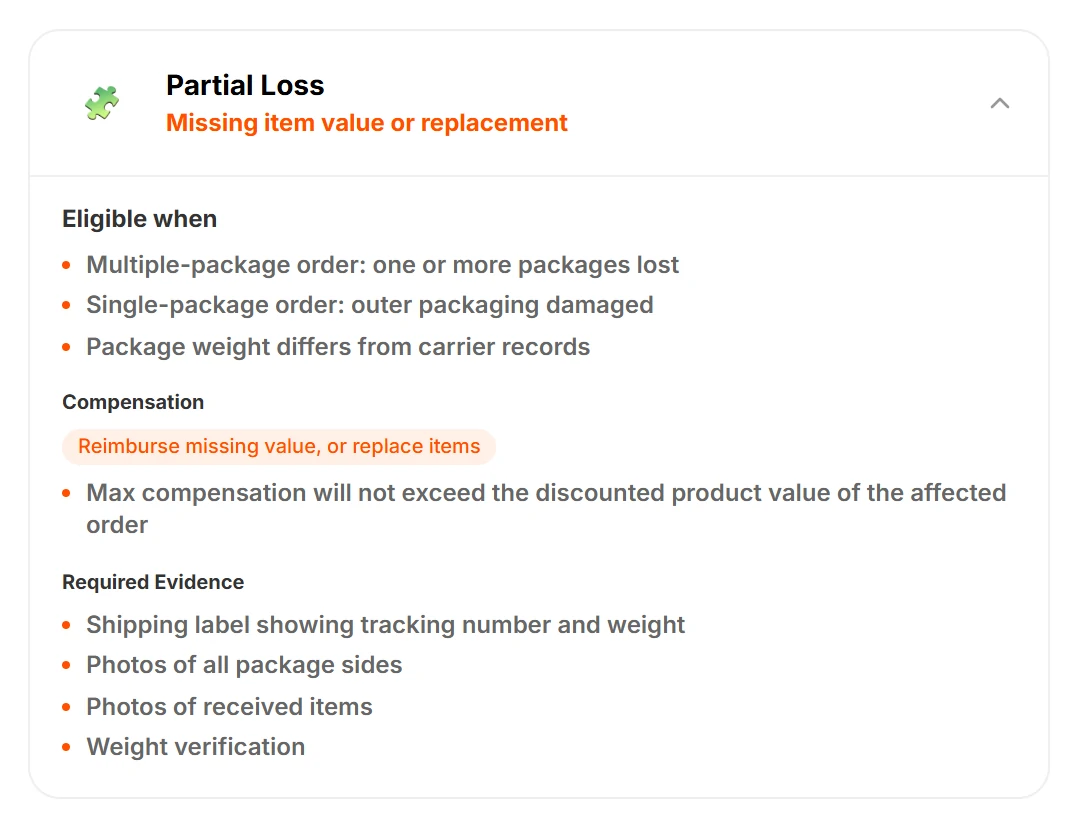
The Partial Loss card lists three situations under “Eligible when”: a multiple-package order where one or more packages are lost; a single-package order whose outer packaging is damaged; and a package whose weight differs from carrier records.
Its remedy is to reimburse the missing value or replace the items, and it sets a ceiling: compensation “will not exceed the discounted product value of the affected order”. Discounted is the important word: read plainly, if a coupon or promotion lowered what you paid, the ceiling follows the lower figure rather than the listed price.
The evidence list is specific to this card: a shipping label showing tracking number and weight, photos of all package sides, photos of the received items, and a weight verification.
Weight as evidence
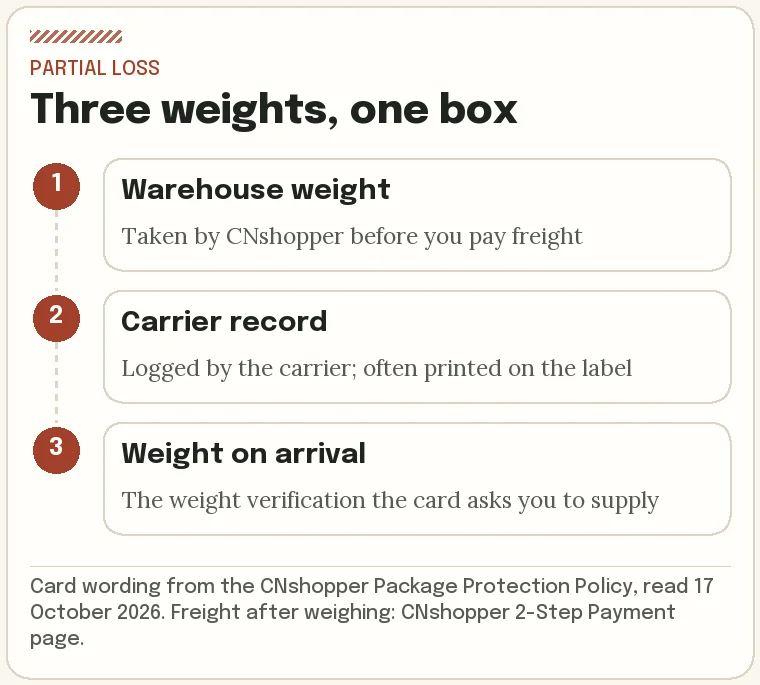
Two of the four evidence items are about weight, and the third eligibility line is a weight mismatch. That makes weight the backbone of this card.
There are up to three weight records for one parcel. CNshopper weighs the parcel at the warehouse before you pay international freight; that weight is what the second payment is based on. The carrier records a weight when it accepts and moves the parcel, and that figure is often printed on the label. Then there is what the box weighs when it reaches you, which is the “weight verification” the card asks for.
A gap between the first two and the third is what the card calls a weight that differs from carrier records. The card does not say how large the gap must be, which scale is acceptable, or whether CNshopper’s warehouse weight counts as a carrier record. Those are questions for the review.
Orders that travel as more than one box
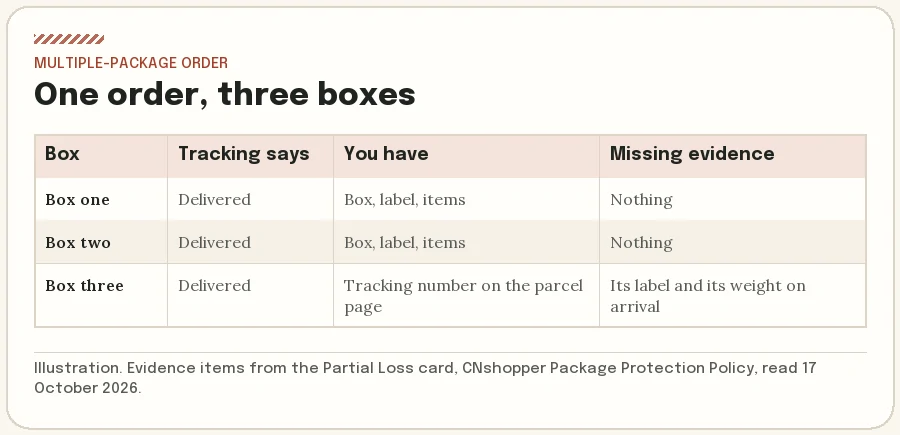
When an order ships as several packages and one of them never turns up, the Partial Loss card is written for exactly that: “Multiple-package order: one or more packages lost”. It is worth knowing before shipping how many boxes your parcel became, because the answer decides which card you reach for.
There is an awkward gap in the evidence list for this shape. The card asks for a shipping label showing tracking number and weight, but for the box that never arrived you will not have its label. The boxes that did arrive have theirs, and the parcel page keeps every tracking number. Whether that stands in for the missing label is not stated on the page.
If the missing box shows as delivered, its situation also looks like Porch Theft. The page does not say which card wins when both fit; the review decides.
The Lost card, and why a delivered scan sits outside it
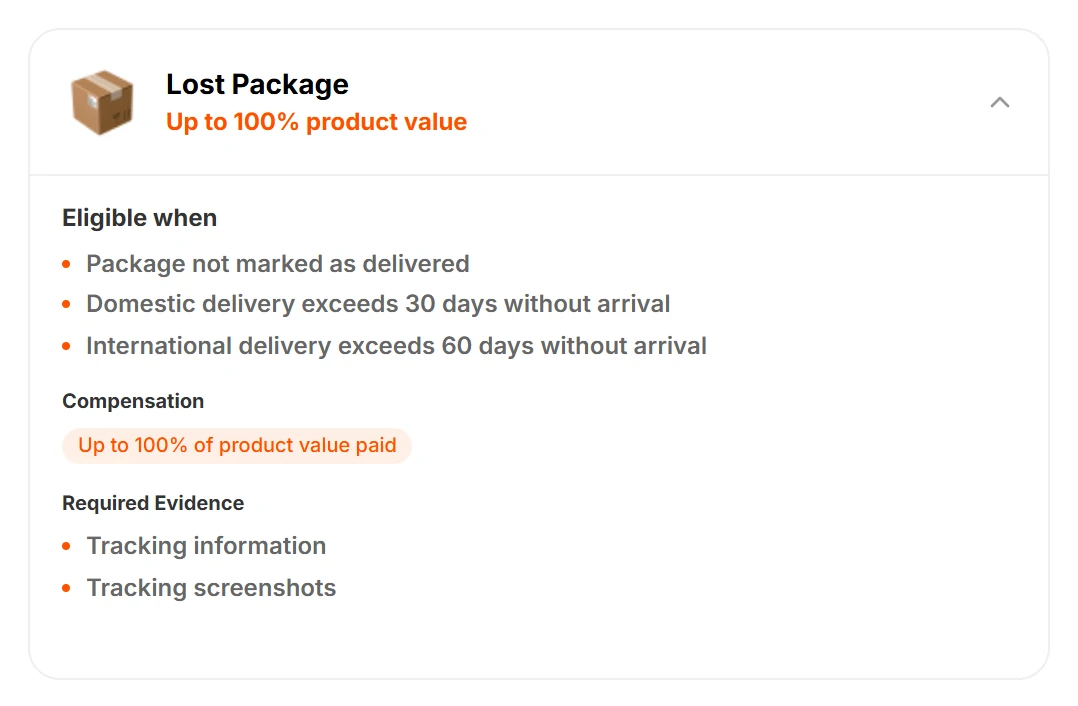
The Lost Package card is the one most people expect to use. Its conditions are: package not marked as delivered, and either domestic delivery exceeding 30 days without arrival or international delivery exceeding 60 days without arrival. The evidence is tracking information and screenshots.
Its first condition is the reason this site exists as a separate guide. Once tracking shows a delivery event, the Lost card no longer describes your parcel, however lost it is. Porch Theft, Misdelivery or Partial Loss are the cards that start from a delivered scan.
The page does not define which part of the journey counts as domestic and which as international for a parcel that starts in China. It also links two cards in one line: under Delivery Delay, “If later confirmed as lost, additional compensation may apply under Lost Package rules.”
Damage you can see from the outside
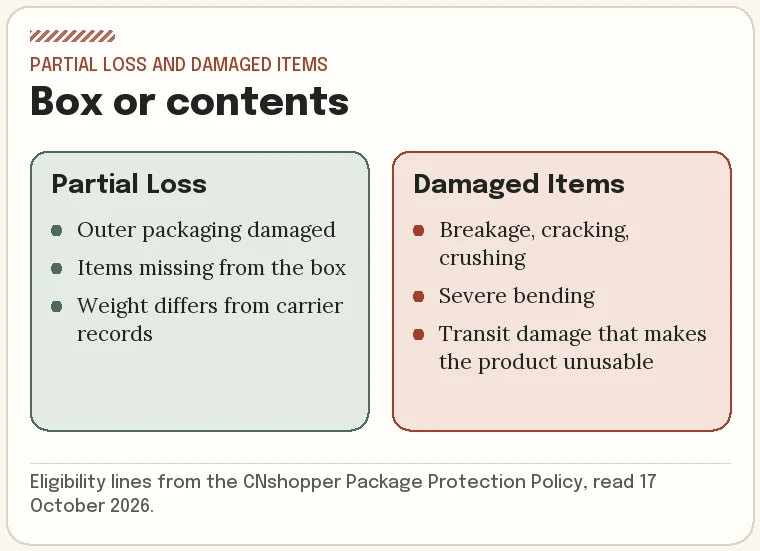
The second Partial Loss shape, a single-package order with damaged outer packaging, sits close to another card, Damaged Items. The difference is what is wrong. Damaged Items is about the product: breakage, cracking, crushing, severe bending, or transit damage that makes it unusable. Partial Loss is about the parcel: a torn or crushed box that suggests something is missing.
If the box arrives damaged and lighter than its label says, both the outer-packaging line and the weight line of Partial Loss point the same way. If the box is fine but the item inside is broken, the Damaged Items card is the one written for it.